San Francisco Light Wells: A Blessing or a Curse?
If you live in a San Francisco row house or zero lot line home, you probably have a light well—even if you don't call it that. That recessed exterior space carved into your building to funnel natural light into interior rooms? That's a light well. And if you've ever dealt with water damage in a bathroom or kitchen that doesn't have an exterior wall, you already know why they're both ingenious and infuriating.
The San Francisco building code takes light well issues seriously enough to have a specific reporting category for them. That tells you something. These architectural necessities solve a real problem—how to get light and ventilation into rooms that would otherwise be dark, damp boxes—but they create their own set of challenges. For forty-five years, Sure Roofing has been dealing with those challenges, and we've learned a few things that might save you time, money, and frustration.
Why Light Wells Exist (and Why They're Actually Brilliant)
San Francisco's urban density left architects with a problem. Row houses and zero lot line construction meant many rooms had no exterior walls facing the street or a yard. Building codes require that bathrooms and kitchens have both natural light and ventilation to the outside. Light wells became the solution: engineered cavities that bring air, light, and egress routes to interior spaces that would otherwise have none.
It's clever design. It works. And in the decades since they became standard in San Francisco, they've made countless interior bathrooms and kitchens livable.
So Why Do They Leak So Much?
Here's the thing about light wells: water is going to find its way down there. Rain comes down, gravity does its job, and water collects in that engineered cavity. The question is whether that water gets directed safely away or if it ends up inside your home.
Most people assume the problem is the floor or base of the light well. It makes sense—water pools there, so shouldn't that be where it's leaking in? But after decades of waterproofing light wells across San Francisco, we've found something counterintuitive: the base of the light well is rarely the culprit.
The floor of a light well gets little or no direct sun exposure. It doesn't oxidize and decompose at anywhere near the rate of a roof that sees eight hours of daily sun, year after year. It also gets minimal wind and foot traffic, which further reduces wear and tear on whatever waterproof membrane is down there. The conditions are actually favorable for a waterproof system to last a long time.
The real trouble comes from elsewhere—and it's worth knowing where to look before you panic about structural damage.
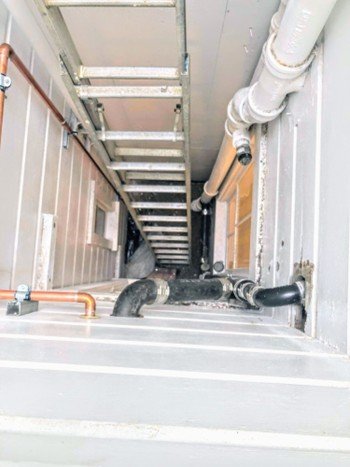
Light well interior showing typical infrastructure density
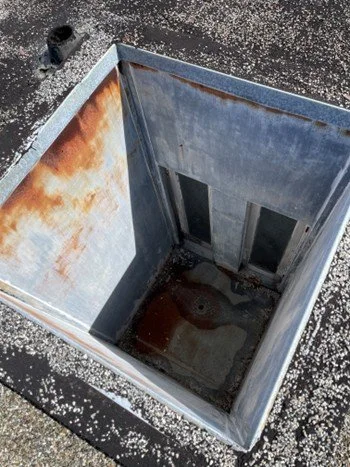
Deteriorated light well base showing typical failure conditions
Where Light Well Leaks Actually Come From (In Order of Frequency)
Backed Up or Cracked Drains
This is the number one culprit, and it's not really a waterproofing problem at all—it's a plumbing problem. Light wells are designed with drain systems to move water away from the building. When those drains get clogged with leaves, sediment, or debris, or when they crack or corrode over time, water has nowhere to go. It sits in the well, and eventually it finds its way into your home.
If you're experiencing light well leaks, start here. Check your drain. Is water backing up? Is there standing water after it rains? That's your answer. A plumber can clear a clogged drain in an hour. A cracked drain line may take a bit longer, but it's straightforward work. Do this first, and you'll solve 80% of light well leak problems.
Flashing Movement Around Penetrations
Pipes, conduits, and vents pass through the walls and floors of light wells. These penetrations need flashing—thin metal or rubber membranes that seal the space between the pipe and the building surface. Over time, the building settles, the pipes shift, or the flashing corrodes. Small gaps open up. Water finds them.
This is where roofers and waterproofing specialists come in. It's a fixable problem, and it's something Sure Roofing handles regularly. But it's typically a secondary issue—about 10-15% of light well leak complaints we investigate trace back here.
Deteriorating Windows, Doors, and Siding
The walls of a light well are typically exposed wood siding or windows. Wood cracks and splits. Caulking fails. Frames rot. When the building envelope fails, water comes in. This is also a plumbing and carpentry issue more than a roofing one, though you'll often need multiple trades to fix it properly.
The Floor (Yes, Sometimes It Actually Is the Floor)
After you've eliminated the first three possibilities, then you can point at the base of the light well. But by the time you've done the detective work, you'll probably have already solved your leak problem. The floor is genuinely the least likely culprit, maybe 5% of the time.
What Sure Roofing Can Help With (And What We Can't)
Here's the honest truth: if you have a light well leak in San Francisco, the first person you should call is a plumber. Have them check your drain system. Have them inspect the pipes and vents passing through the well. If they find a clogged drain or a broken pipe, get that fixed. Most of the time, that's the end of the story.
If the plumber clears the drain, the leak stops, and life goes on? Great. That's the most likely scenario.
If the plumber does their work and water is still coming in, then call Sure Roofing. We can evaluate the flashing around penetrations, assess the waterproof membrane on the floor, and determine whether the problem is with the building envelope—the siding, windows, or structural integrity of the light well itself. We have forty-five years of experience with exactly these situations. We know what to look for, and we know how to fix it.
What we won't do is sell you a solution you don't need. If your leak is plumbing-related, we'll tell you that. We're far more interested in being the people you call when you genuinely need a roofer than in generating unnecessary work.
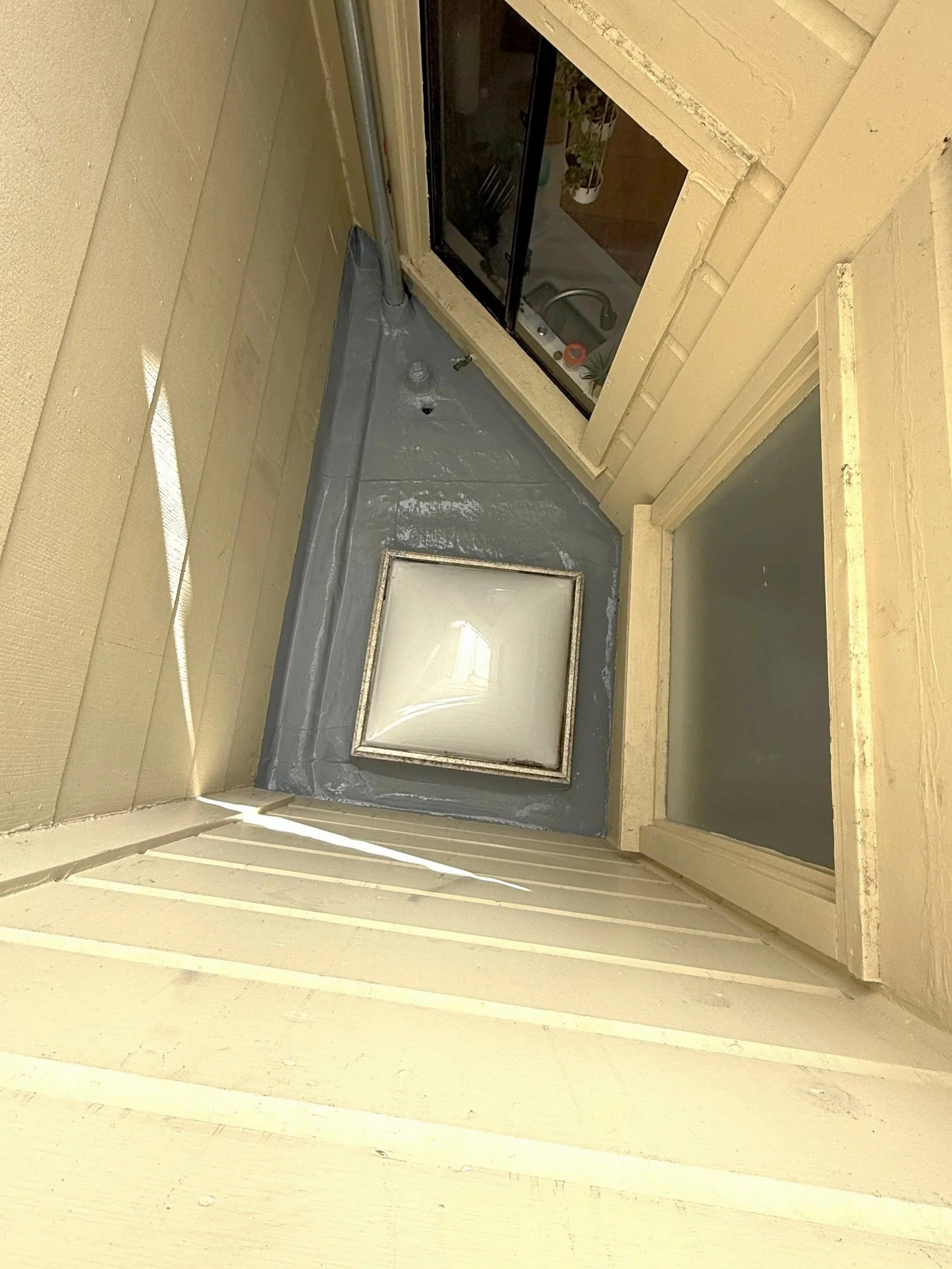
Professional waterproofing: silicone elastomeric membrane application by Sure Roofing
The Bottom Line
Light wells are a fact of life in San Francisco. They solve an architectural problem that would otherwise leave your interior rooms without light or air. Yes, they leak. But most light well leaks aren't complicated mysteries. They're drainage problems, and drainage problems have straightforward solutions.
If you're dealing with water intrusion in an interior bathroom or kitchen—the kind that shows up during or after rain—start with a plumber. Have them trace the source. Odds are, you'll have your answer in a day or two.
And if you've done that work and the leak persists, or if you're not sure whether you're looking at a plumbing issue or a roofing issue, that's when Sure Roofing comes in. We'll give you a straight assessment and tell you exactly what needs to happen next.
We've been waterproofing San Francisco for decades. We've learned when to stay out of the way and when to roll up our sleeves. Either way, we'll point you in the right direction.