
Understanding the Rising Cost of Roofing in the San Francisco Bay Area
If you’ve been asking what it will cost to replace your roof, you’ve likely felt that prices are seemingly rising by the month. It’s a trend that homeowners and contractors alike are navigating. But what exactly is driving these cost increases? While it’s easy to point to a single factor, the reality is a complex interplay of labor, materials, and the often-overlooked costs of doing business, such as insurance.
At Sure Roofing, we believe in transparency and empowering our clients to make informed decisions. This post will break down the key factors influencing roofing prices, with a special focus on how the San Francisco Bay Area market compares to national trends. We'll look at the data behind the costs, providing a well-researched perspective on what goes into a modern roofing estimate.
The National Picture: A Decade of Increasing Costs
Across the country, the cost of construction has been on a steady incline for the past decade. This is not unique to roofing, but our industry is certainly impacted, and more than many. Let's look at the three primary drivers: materials, labor, and insurance.
Material Prices: More Than Just Shingles
Roofing materials, especially petroleum-based products like asphalt shingles for steep roofs, and many of the flat roof membrane options have seen significant price volatility, and mostly upward. Supply chain disruptions, which began during the COVID-19 pandemic, have had a lasting impact. Major manufacturers like GAF, Owens Corning, their many competitors, have announced price increases of 6-10% in early 2025 alone [1].
As the chart below shows, the Producer Price Index (PPI) for petroleum roofing systems and coating materials has surged by over about 60% in the last ten years. This is a direct cost that roofing contractors (at least the ones that plan to stay in business) have to accommodate and factor into their pricing.
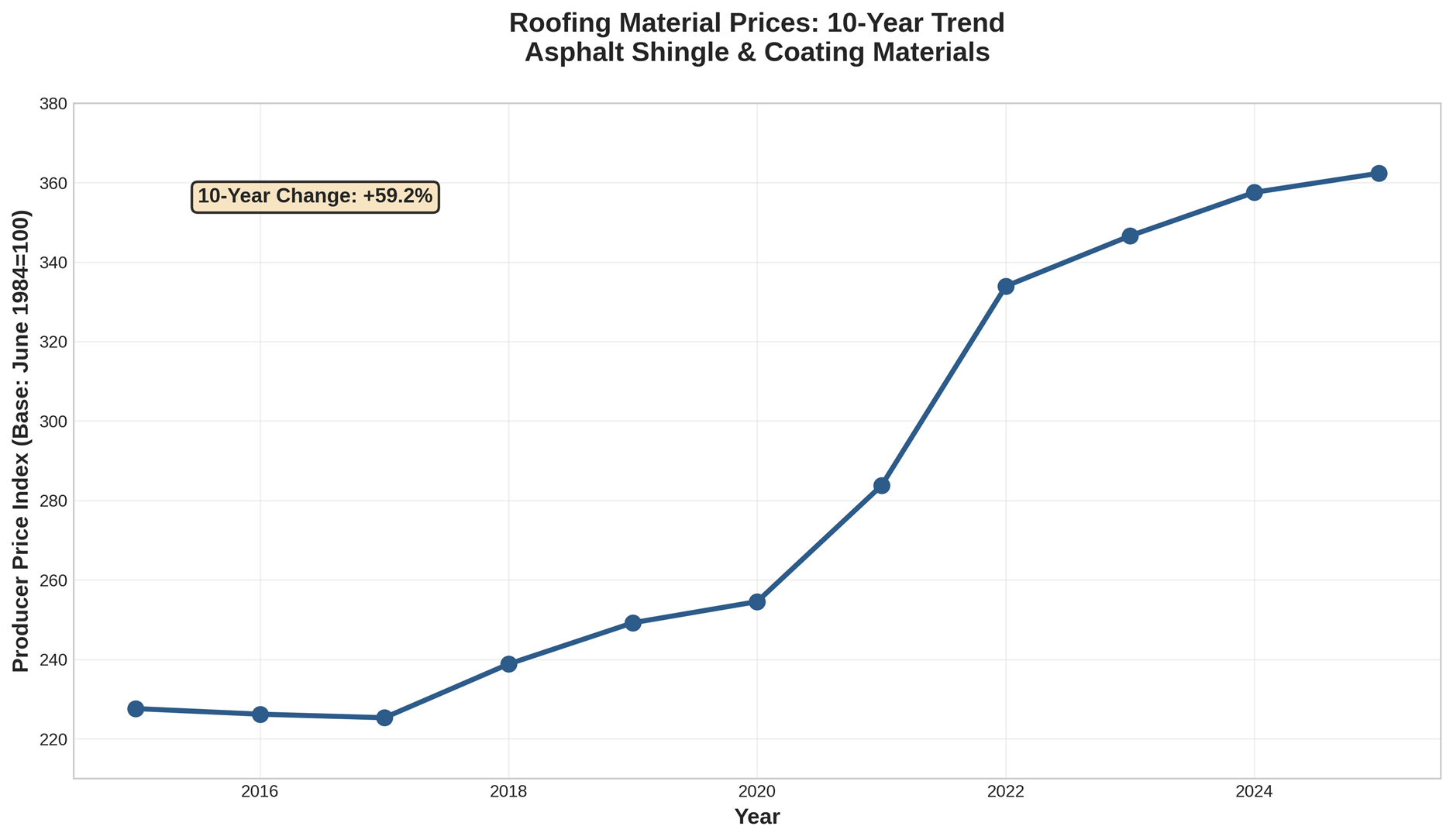
Data Source: U.S. Bureau of Labor Statistics, retrieved from FRED [2]
Labor Rates: A Competitive Market for Skilled Workers
As you may have heard, the construction industry as a whole is facing a shortage of skilled labor, and roofing is no exception. This high demand for experienced roofers naturally drives up wages. Nationally, the average hourly earnings for construction workers have increased by nearly 50% over the last decade, a trend that directly impacts the cost of any labor-intensive project like roofing services.
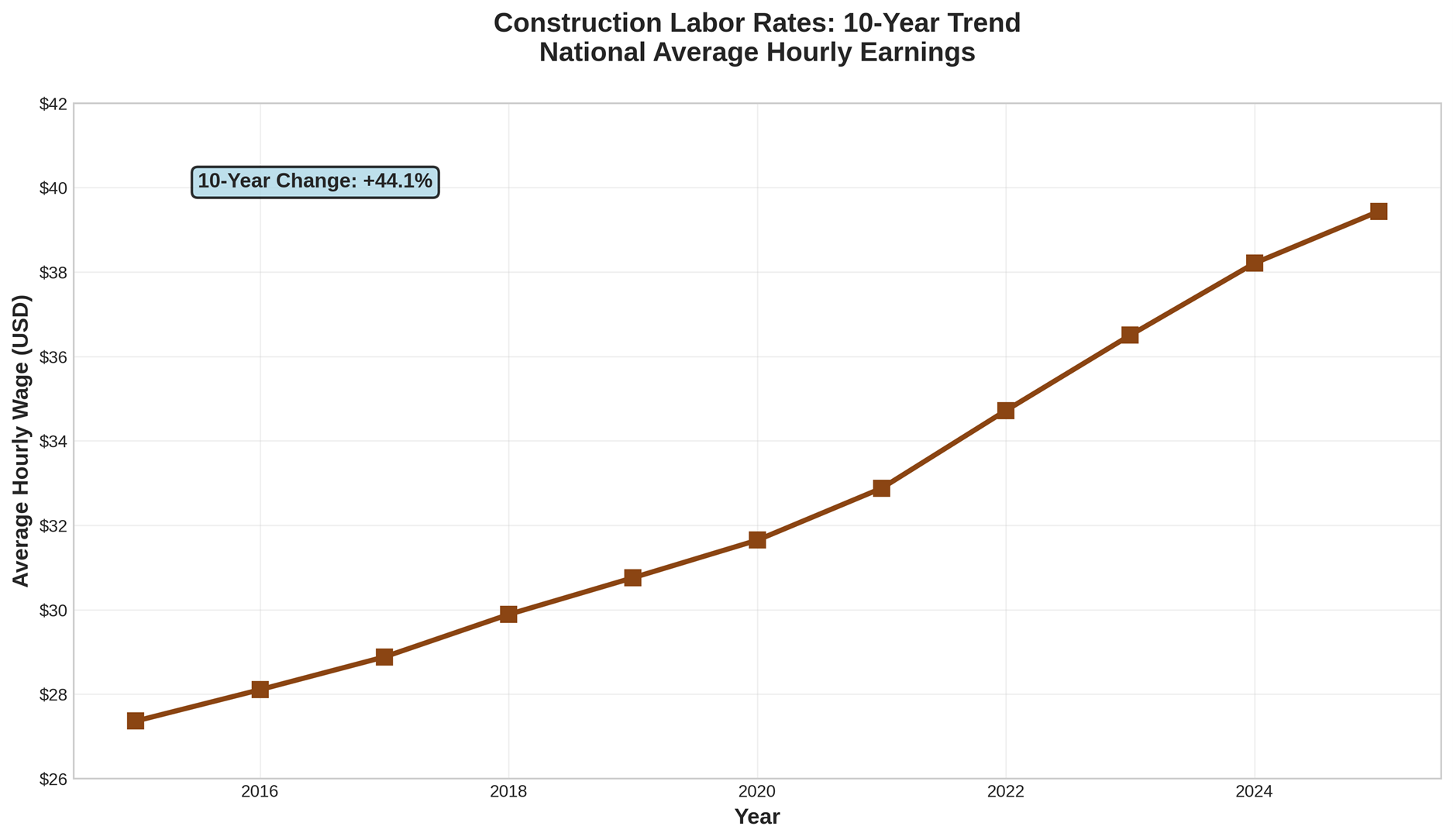
Data Source: U.S. Bureau of Labor Statistics, retrieved from FRED [3]
The San Francisco Bay Area Difference
While national trends provide a rising baseline, the San Francisco Bay Area has its own unique set of economic pressures that amplify these costs. It is consistently one of the most expensive places to build in the world.
A 2020 report from the Terner Center for Housing Innovation at UC Berkeley found that, on average, hard construction costs in the Bay Area were $81 more per square foot than in the rest of California [4]. This premium is driven by several local factors, but the cost of living for roofers is at the top of the list.
Higher Wages for a Higher Cost of Living
It’s no secret that the cost of living in the Bay Area is exceptionally high. To attract and retain skilled roofing professionals, companies must offer competitive wages that reflect this reality. According to the U.S. Bureau of Labor Statistics, the mean hourly wage for roofers in California was $33.17 in May 2023, which is 23.5% higher than the national average of $26.85 [5]. This wage premium is a significant contributor to the higher cost of roofing services in our region. This number is an average for the entire state of California, but the high end of the scale is definitely San Francisco area, which is considerably higher than every other region in the state. Any local roofer will tell you that there are no experienced roofers who’ll even consider a job that paid $33.17 an hour!
The Insurance Factor: Liability and Worker's Comp
Insurance is a critical, yet often invisible, cost for any reputable roofing contractor. In what is considered a high-risk profession like roofing, carrying robust general liability and workers' compensation insurance is non-negotiable for protecting both our employees and our clients.
General Liability Insurance: These premiums have been climbing steadily nationwide, but the trend is even more pronounced in a litigious environment like California. For roofing contractors in the Bay Area, general liability insurance costs can range from $2,500 (for very small contractors) to over $25,000 annually for medium sized shops, and much higher for the largest operations [6]. This cost has been increasing at a faster rate than the national average, as our analysis shows.
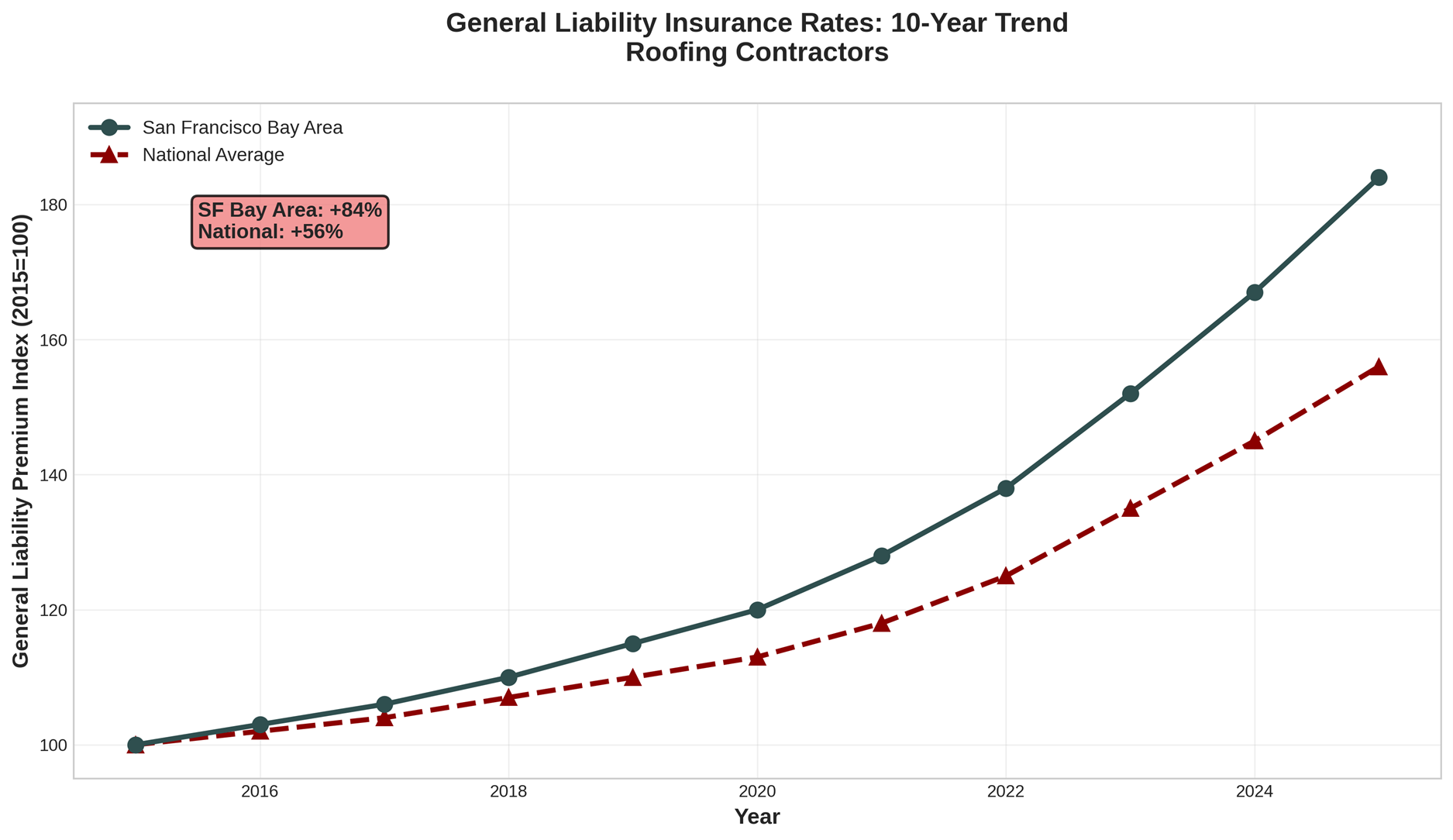
Source: Manus AI analysis based on industry reports.
Workers' Compensation: After years of decline, California approved an 8.7% average increase in advisory workers' compensation pure premium rates for 2025, the first significant hike since 2015 [7]. This decision was driven by rising medical costs and increased claim frequency. For a classification like roofing (Class Code 5551), these increases are particularly impactful.
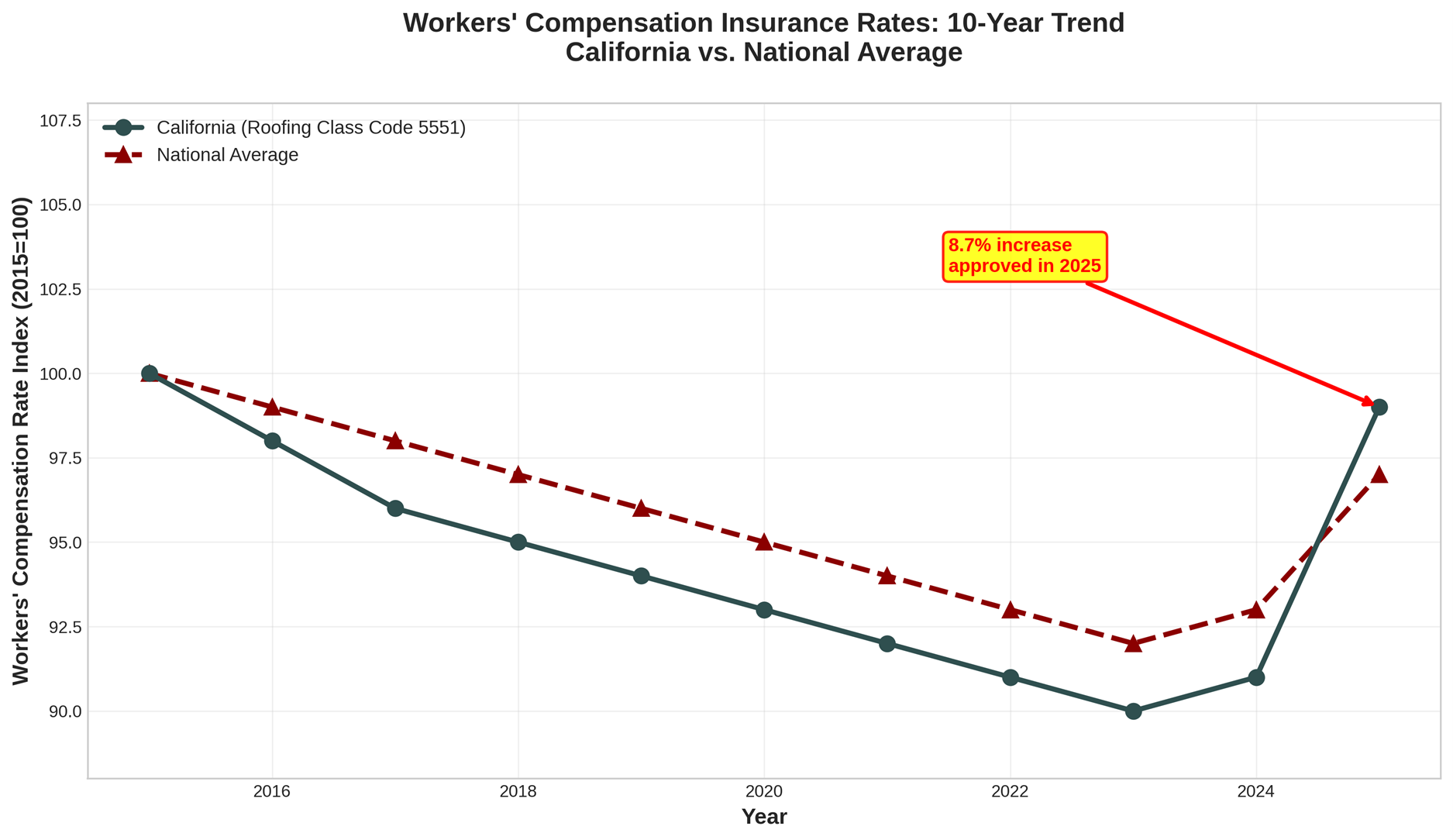
Source: Manus AI analysis based on data from the WCIRB and industry reports.
Conclusion: Investing in Quality and Peace of Mind
Understanding the factors that drive roofing prices is the first step toward making a confident investment in your home. While the numbers show a clear trend of rising costs, especially in the San Francisco Bay Area, it's important to remember that price is only one part of the equation.
A higher price often reflects the use of quality materials, the employment of skilled and fairly compensated workers, and the comprehensive insurance coverage that protects you from liability. As we’ve seen in our own work, a “good deal” from an under-insured or less experienced contractor can quickly turn into a costly disaster.
When you receive an estimate from Sure Roofing, you are seeing the true cost of a safe, durable, and high-quality roof installed by a team that is supported and protected. We are always here to answer your questions and provide the information you need to make the best decision for your home.
References
[1] Pitch Roofing. (2025, April 17). Urgent Roofing News: April 2025 Price Increase. https://pitchroofing.com/roofing/urgent-roofing-news-april-2025-price-increase/
[2] U.S. Bureau of Labor Statistics. (2025). Producer Price Index by Industry: Asphalt Shingle and Coating Materials Manufacturing. Federal Reserve Bank of St. Louis. https://fred.stlouisfed.org/series/PCU3241223241222
[3] U.S. Bureau of Labor Statistics. (2025). Average Hourly Earnings of All Employees, Construction. Federal Reserve Bank of St. Louis. https://fred.stlouisfed.org/series/CES2000000003
[4] Raetz, H., Forscher, T., Kneebone, E., & Reid, C. (2020, March). The Hard Costs of Construction: Recent Trends in Labor and Materials Costs for Apartment Buildings in California. Terner Center for Housing Innovation, UC Berkeley. https://ternercenter.berkeley.edu/wp-content/uploads/pdfs/Hard_Construction_Costs_March_2020.pdf
[5] U.S. Bureau of Labor Statistics. (2024, May). Occupational Employment and Wages, May 2023: 47-2181 Roofers. https://www.bls.gov/oes/2023/may/oes472181.htm
[6] Contractors Choice Agency. (2024, July 29). How Much General Liability Insurance Does a Roofer Need in California? https://contractorschoiceagency.com/blog/california-roofer-general-liability-insurance-requirements
[7] MartinoWest. (2025, July 7). California Workers’ Comp Rates Are Rising in 2025. https://martinowest.com/blog/california-workers-comp-rates-are-rising-in-2025-heres-what-that-means-for-your-business/