
More than 80% of San Francisco's annual rainfall falls between November and March, concentrated into just five months of the year, a pattern NOAA's 30-year climate data confirms for the region. A roof only stays weatherproof if the gutters and downspouts underneath it are actually moving that water away from the building once it arrives.
This checklist covers roof and gutter maintenance for rainy season prep: quick checks and cleanings you can knock out before the rain starts, not signs your roof needs replacing. Each one takes a few hours or a single service call, and together they're the difference between a rainy season that passes without incident and one that ends with water somewhere it shouldn't be.
Every task on this list is also the kind of thing that's easy to see coming and easy to put off, right up until the first real storm shows whether it got done.
Why Gutter and Downspout Maintenance Matters Before the Rain Starts
A roof's weatherproofing depends on where water goes after it lands, not just the material covering the roof deck. The Federal Emergency Management Agency (FEMA) recommends checking that gutters and downspouts are clear and working so water moves away from the home, and the Insurance Institute for Business & Home Safety (IBHS) advises clearing debris from gutters and downspouts to reduce leak and water damage risk.
The Insurance Information Institute (III) adds that clogged gutters can let water seep into a house. IBHS also recommends inspecting and cleaning roof drainage twice a year, in spring and fall, and more often on roofs near trees that shed heavily.
The takeaway across all three organizations is simple: water that can't get off a roof and away from a building tends to find somewhere else to go, and a few hours of seasonal maintenance is the cheapest way to make sure it doesn't.
Clear and Inspect Your Gutters and Downspouts
Three tasks make up the core of rainy season gutter maintenance: sweeping the gutters themselves, checking any guards or screens installed over them and clearing the downspouts that carry water down and away. Each one addresses a different point where debris can block the path water needs to take off the roof.
Hire a Professional to Sweep Your Gutters
Sure Roofing recommends hiring a professional, whether that's a roofing company or a handyperson, to sweep gutters clear of leaves and debris before the rainy season starts. A gutter full of leaves can't carry water anywhere, no matter how well the roof itself sheds rain.
This is the simplest task on this list and the one most homeowners put off until water is already overflowing onto siding or pooling near the foundation.
Inspect Gutter Guards and Screens for Damage or Debris
Gutter guards and screens reduce how much large debris enters a gutter, but they aren't a substitute for seasonal inspection. Debris still collects on top of guards or around scupper openings even when the guards themselves are doing their job.
Sure Roofing recommends inspecting screens and guards for damage each season and swapping out any guard that debris has clogged beyond a simple cleaning or that shows visible cracking or sagging. A damaged guard can trap debris instead of shedding it, which defeats the purpose of installing one in the first place.
Snake Your Downspout Pipes to Clear Blockages
Sure Roofing recommends hiring a plumber to snake downspout pipes as part of rainy season prep, especially on older buildings where pipes run underground before reaching the street. A partially or fully blocked downspout can undo a fresh gutter cleaning by backing water up into the gutter above it.
Once a downspout runs clear, flushing it and watching where the water lands is the fastest way to confirm it's actually carrying water away from the building rather than dumping it against the foundation. That final check takes a minute and catches problems a visual inspection alone would miss.
What Are Leader Heads and Why Do They Clog So Easily?
A leader head, also called a conductor head, is the collector between a gutter and a downspout that gathers concentrated roof runoff before it drops into the vertical pipe below. Buildings often mount them at parapet transitions or roof corners, sometimes as plain metal boxes and sometimes as decorative copper fixtures on older properties.
That wide opening is exactly what makes leader heads so easy to clog. Sure Roofing's crews regularly find leaves, sticks and even tennis balls sitting inside a leader head that should be draining freely, since kids tend to treat the wide copper boxes at the top of a downspout as a target. A leader head packed with debris backs water up the same way a clogged gutter does, just at a single concentrated point instead of along the whole roofline.
If You Have a Flat Roof, Don't Forget Your Scuppers
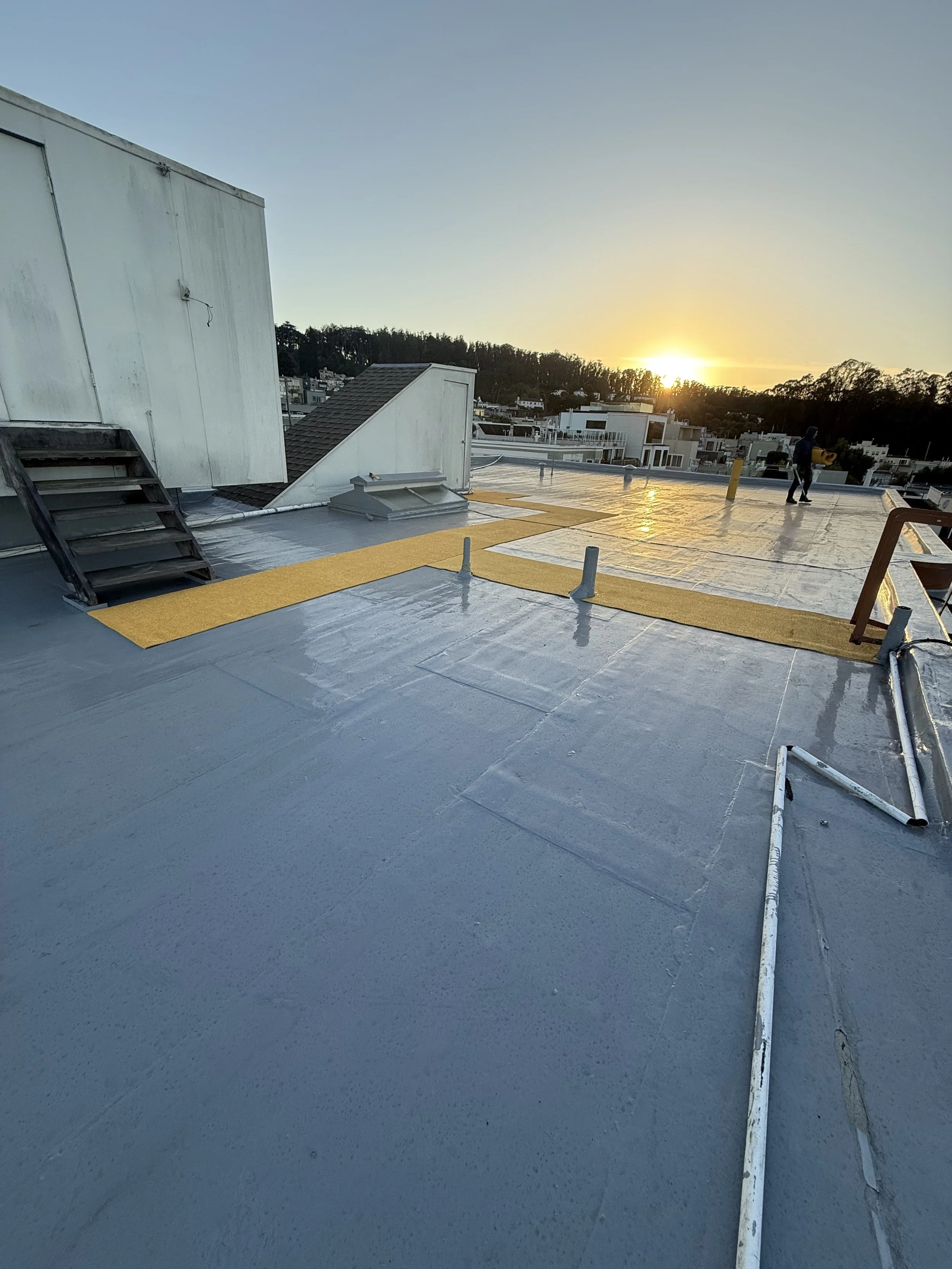
Flat roofs don't drain through a gutter running along the roof edge the way sloped roofs do. Instead, water leaves through scuppers, openings at the roof edge or through a parapet wall that channel water off the surface and often into a leader head and downspout below.
IBHS specifically recommends keeping scuppers clear of debris and roof granules, since accumulated granules can impede drainage on their own. Clearing a scupper is usually straightforward, a quick check for leaves and grit at each opening before the rainy season starts.
If water keeps pooling after you clear a blockage, that points to a roof slope problem rather than a simple debris issue, and it's worth a professional look rather than repeat cleanings. Standing water left sitting on a flat roof adds weight and wears at the membrane underneath it, so a slope issue tends to get worse the longer it goes unaddressed.

Do Gutter Guards Mean You Can Skip Seasonal Cleaning?
No. Gutter guards reduce how much large debris enters a gutter, but they don't replace a twice-yearly drainage inspection. Debris still collects on top of guards, at downspout inlets and at scupper openings, so a guard system doesn't remove the need to look at the roof each season.
Skipping that inspection carries a second cost too. Many homeowners insurance policies exclude damage tied to neglected maintenance, which means a clogged gutter isn't just a roofing problem when it causes water damage.
Signs a Cleaning Won't Fix and You Need a Professional Look
Some drainage problems go beyond what a seasonal cleaning can solve. Sure Roofing recommends calling in a professional if you notice any of these signs:
Interior staining appears.
Flashing has separated.
Gutters sag under their own weight.
Water overflows during a moderate rain rather than only during a downpour.
If gutters or downspout pipes appear rusty or rust-streaked, call Sure Roofing for a quote on replacement. A plumber can inspect the drainage system, and Sure Roofing can provide referrals or replace a drainage system that needs it.
Persistent ponding anywhere on the roof deserves the same attention, not just at a scupper. Standing water adds weight and accelerates wear on the roofing membrane underneath it, so a puddle that keeps coming back after cleaning is worth a professional visit rather than another cleaning cycle. Catching that early is cheaper than waiting for a leak to show up on a ceiling.
Call Sure Roofing Before San Francisco's Rains Arrive If Your Roof Is Over 10 Years Old
A rainy season checklist isn't about forecasting the next storm. It's about giving water somewhere to go before that storm finds whatever gutter, downspout or scupper got skipped this year.
If it's been longer than 10 years since your roof was installed, call Sure Roofing.
-
Sure Roofing recommends clearing gutters and downspouts at least twice a year, in spring and fall, which matches guidance from the Insurance Institute for Business & Home Safety (IBHS) on roof drainage. Roofs near trees that shed heavily need more frequent attention, since leaf buildup between scheduled cleanings is what usually causes water to back up during a storm.
-
Sure Roofing describes a leader head as the box-shaped collector that sits between a gutter or scupper and a downspout, gathering roof runoff before it drops into the pipe. Its wide opening makes it easy to collect leaves, sticks and other debris along with the water it's meant to channel.
-
Sure Roofing treats flat roof drainage differently, since flat roofs rely on scuppers rather than the gutters used on sloped roofs. Scuppers need to stay clear of leaves, twigs and roof granules, and standing water that persists after you clear a blockage can point to a slope problem instead of debris.
-
Sure Roofing doesn't treat gutter guards as a replacement for seasonal cleaning. Guards reduce how much large debris enters a gutter, but debris still collects on top of them and around downspout and scupper openings, so a twice-yearly inspection stays necessary even on a gutter with guards installed.
-
Sure Roofing & Waterproofing confirms that historic district designation in San Francisco can affect roof work when exterior alterations are visible from the street. SF Planning requires a Certificate of Appropriateness for some exterior changes on designated properties, including flat roof replacements with visible parapets. Sure Roofing & Waterproofing checks historic resource status before beginning the permitting process.