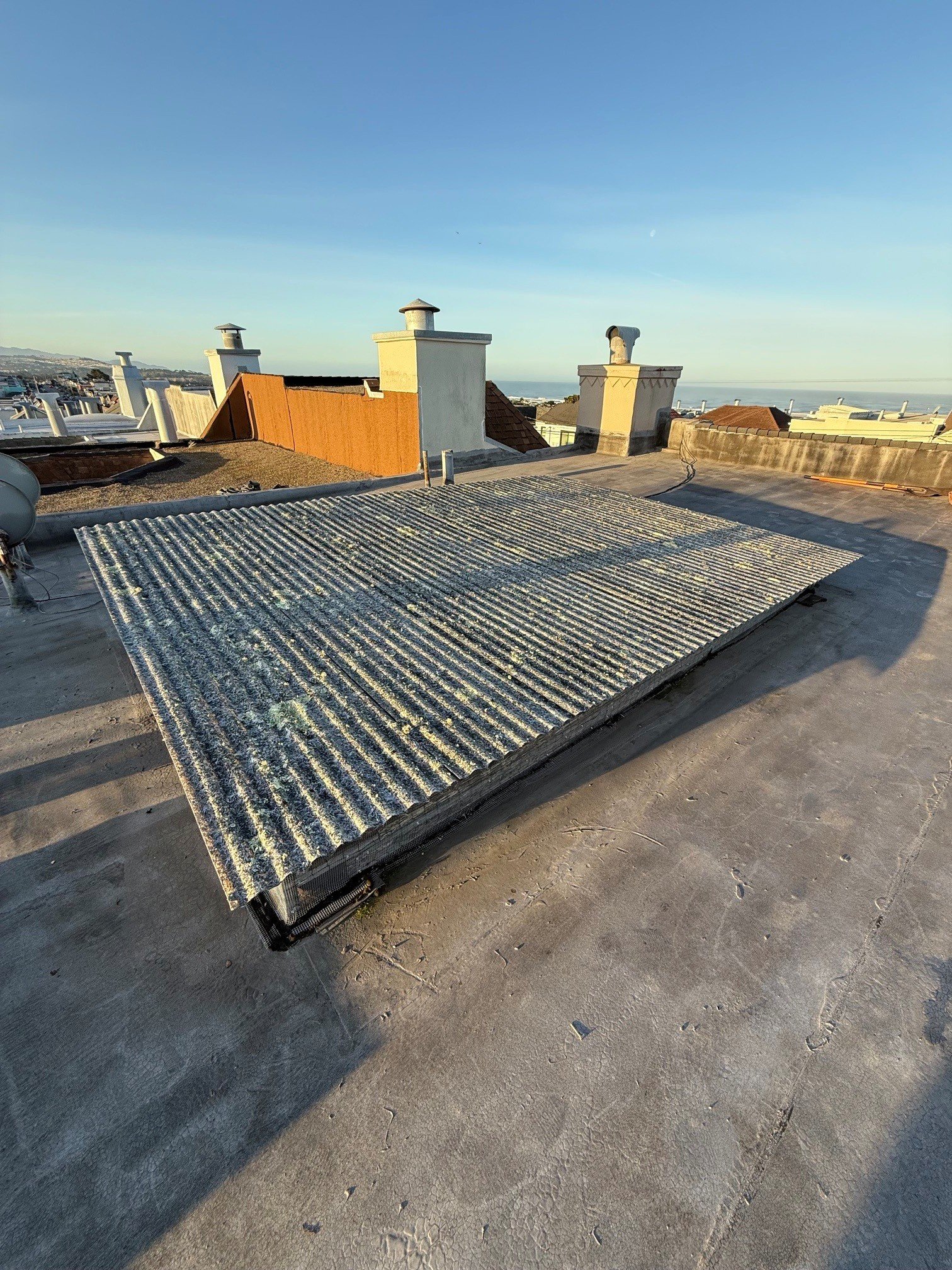
an example of a roof at mid-life that failed prematurely
San Francisco roofing bids for the same job can differ by thousands of dollars, usually because of what each bid covers. California's Contractors State License Board (CSLB) recommends comparing at least three bids before deciding on the lowest total. That advice reflects what experienced contractors and homeowners already know: two bids that price the same roof rarely price the same job.
Before comparing what each bid costs, compare what each bid covers. A lower total often accounts for a smaller scope: fewer layers in tear-off, no deck-inspection protocol, flashing coverage and material described only in general terms, or a permit listed as the homeowner's responsibility. This post walks through what a complete bid includes, where scope gaps appear and what credentials tell you whether a bid was built to cover the actual job.
The Price Gap Between San Francisco Roofing Bids Is Rarely About Profit Margin
Two contractors with identical labor rates and material suppliers can price the same San Francisco roof differently because they scoped the job differently. One included a deck-inspection allowance and a written change-order process for damaged sheathing. The other excluded both. One specified flashing at every wall transition, penetration and parapet. The other referenced flashing generally. One listed permit fees, disposal and haul-off as explicit line items. The other did not.
None of those differences make either bid dishonest. Comparing only the bottom line means comparing two different jobs. A line-item review is the comparison that protects the homeowner.
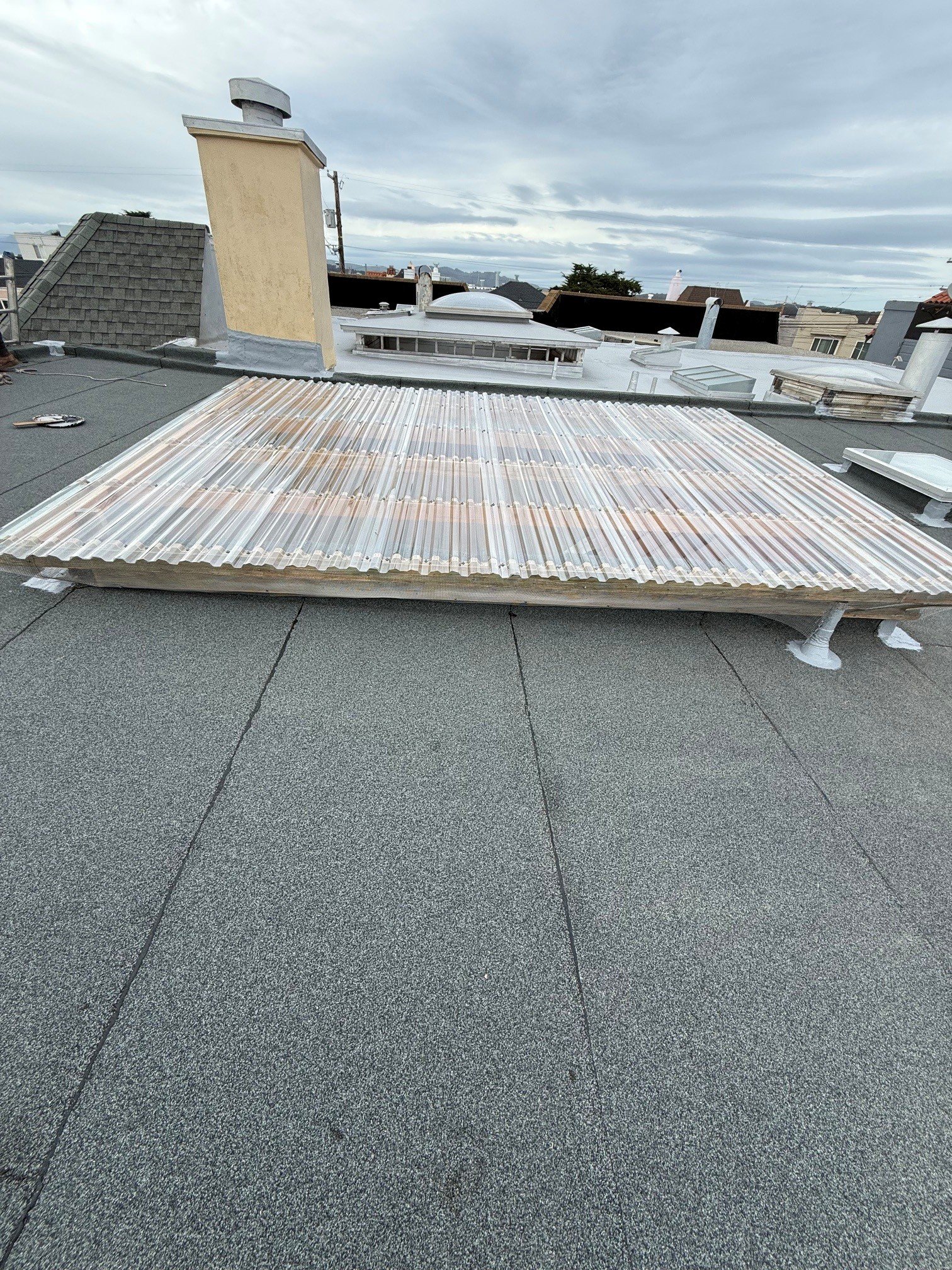
The same roof after Sure roofing replaced the failing membrane
Coastal Exposure Makes Fastener and Flashing Specifications a Real Question
San Francisco's coastal environment adds a specific question to every bid comparison. The National Oceanic and Atmospheric Administration (NOAA) records 71.2 days of measurable precipitation per year in its 1991-2020 climate normals for the downtown San Francisco station. These are days with at least 0.01 inch of precipitation, meaning consistent moisture cycling across the roof calendar.
In a 2014 University of Florida survey submitted to the Florida Building Commission, 58% of roofing professionals who had observed fastener corrosion reported more corrosion on coastal jobs, compared with 17% for inland buildings. FEMA's Local Officials Guide for Coastal Construction identifies the mechanism: salt-laden air can weaken roofing fasteners because extensive corrosion degrades materials and systems.
No research establishes how many years SF's climate removes from a specific roof system. Fastener and flashing specifications matter more at a coastal property than inland, and "electrogalvanized" covers a wide range of corrosion resistance.
University of Florida lab testing for the Florida Building Commission found corrosion resistance varied widely among electrogalvanized nails from three manufacturers; proportions failing the salt-fog criterion were 77.8%, 66.6% and 5.6%. Separately, the National Institute of Standards and Technology (NIST) documented fastener securement loss in wet roof assemblies, in some cases in under two years. NIST attributed the cause to moisture in the assembly.
Ask each bidder to specify the exact fasteners and flashing materials in the proposal, their corrosion-resistance grade and how the proposed scope addresses any existing moisture before the new roof goes in. Comparing those answers is how you determine whether two bids address the same coastal exposure conditions.
A Legitimate San Francisco Roof Job Has to Cover More Line Items Than Most Owners Expect
A complete San Francisco roof job must account for more than material and installation before the first square goes on the roof. The bid should specify the full roof assembly by name: the membrane or shingle system, underlayment, flashing and edge details and the manufacturer's required installation method for that specific system.
The bid should also state the tear-off scope including the number of existing layers and where removal stops, along with a deck-inspection protocol and a written change-order procedure for damaged sheathing discovered during tear-off. CSLB advises writing cleanup and removal into the contract.
The permit is a separate line item. SFDBI requires a reroofing permit for most replacements; permit fees start at $514 for single-family homes and duplexes; other building types start at $714. A licensed C-39 contractor must apply for the permit. SFDBI's application process also asks for the existing and proposed materials, roof type, potential street-visible changes, hot work and any street-space requirements.
If the project needs scaffolding or a debris box in the public right-of-way, a San Francisco street-space permit applies unless roof access is available off-street through an alleyway. A contractor experienced on SF jobs can confirm during the site visit whether the alley exemption applies.
A Lower Bid Total Usually Means a Smaller Scope
A bid that comes in below the rest usually covers fewer line items. The gaps usually appear in tear-off scope, deck-repair protocols, flashing specifications, permit responsibility, disposal, project duration and insurance coverage.
Sure Roofing also sees low bids from contractors based in counties farther from San Francisco, some of whom stop responding to service requests when the roof eventually leaks.
A bid that excludes a deck-inspection protocol has no mechanism for pricing damaged sheathing that turns up during tear-off. Flashing at parapets, wall transitions and penetrations described in general terms may mean different things to the contractor and the homeowner. A permit listed as the homeowner's responsibility is a cost the homeowner will carry separately. Before concluding that a lower bid is the better deal, ask where each of those items appears in the proposal.
Warranty gaps are easy to miss at the bid stage but costly to discover after the work is done. GAF, a roofing manufacturer, shows in its system warranty that fastening deviations limit warranty coverage. A "25-year roof" label covers the manufacturer's materials warranty. Ask before signing whether workmanship and all components carry the same coverage period, and whether flashing and edge-metal components fall within the offered system warranty.
How Do You Compare What Two San Francisco Roofing Bids Actually Include?
The comparison starts by putting both bids against the same list of line items before looking at totals. CSLB's roofing contractor guide recommends line-item comparison as the basis for a decision. Two bids that cover the same scope should produce similar totals; a significant gap points to scope differences worth identifying before the job starts.
Scope Items to Verify in Every Bid
Put both bids side by side and check that each addresses the same items: the existing-roof removal scope including layer count; the deck-inspection process and what unit price and change-order procedure apply when damaged decking is found; the exact roof assembly by product name, thickness or weight and attachment method; and water-sensitive details at parapets, drains, wall transitions, penetrations and edge flashing.
Also confirm access and disposal: who pays for scaffolding, the street-space permit unless roof access is off-street, debris boxes and haul-off. And confirm permit responsibility: who applies and who schedules the final inspection. If a line item appears in one bid and not the other, ask the second contractor to account for it. The contractor's answer tells you whether both bids price the same job or different ones.
Warranty Terms to Confirm Before Deciding
Ask for the actual warranty document for each proposed system. Confirm which party warrants materials and which warrants workmanship, whether the warranty covers flashing and edge-metal components or excludes them and whether installation requirements (fastener type, spacing, approved adhesives) must be met for coverage to apply. Field substitutions made without your knowledge can void a warranty that requires specific installation details.
What Credentials Tell You Whether a San Francisco Roofing Bid Is Complete?
The permit applicant tells you the most. SFDBI requires the reroofing permit applicant to hold a C-39 license for each reroofing project, California's roofing specialty classification. CSLB says a B contractor must subcontract standalone roofing to a C-39 roofer unless roofing is incidental to a qualifying larger, multi-trade project. Permit responsibility in the bid means a C-39 contractor is accountable to SFDBI from application through inspection.
Before deciding, verify license, bond and workers' compensation through CSLB's license lookup. California requires C-39 licensees to carry workers' compensation insurance; the contractor bond is $25,000. CSLB also recommends asking for evidence of general liability insurance. The statutory minimum covers workers' compensation and the bond; general liability adds coverage beyond those requirements. On any job of significant size, confirm it before signing.
Sure Roofing Has Priced Every Line Item Into Every San Francisco Job Since 1982
Sure Roofing has worked on San Francisco's housing stock since 1982, pricing jobs that account for permit costs, tear-off scope, deck-repair protocols, coastal metal specifications and the full warranty picture. On flat-roof properties, Sure Roofing's assessments address drainage conditions, penetration details and existing moisture before selecting materials. On pitched roofs, the scope covers flashing at every wall transition, corrosion-resistant fasteners and manufacturer installation requirements that keep the warranty intact.
Sure Roofing's Diamond Certified status reflects consistent customer satisfaction that independent surveys verify. For property owners comparing San Francisco roofing bids, Sure Roofing can walk through any competing proposal line by line. See Sure Roofing's roof replacement services, or schedule an estimate to get a complete bid for your property.
-
Every San Francisco roofing bid should specify the roof assembly including membrane or shingle, underlayment, flashing and edge details; tear-off scope and layer count; a deck-inspection and change-order process for damaged sheathing; the SFDBI permit and who applies; disposal and cleanup; and warranty terms that distinguish materials from workmanship. Sure Roofing covers each line item by default.
-
C-39 is California's roofing specialty license, and SFDBI requires the reroofing permit applicant to hold one. CSLB says a B contractor must subcontract standalone roofing work to a C-39 roofer. Sure Roofing holds a C-39 license and pulls the permit on every San Francisco job, covering the inspection process from application through final sign-off.
-
SFDBI requires a reroofing permit for most residential and commercial roof replacements in San Francisco unless an exemption applies. A licensed C-39 contractor must apply for the permit. Fees start at $514 for single-family homes and duplexes and $714 for other building types. Sure Roofing handles the permit application on every job it takes in San Francisco.
-
Two San Francisco roofing bids for the same roof can differ by thousands because contractors scope the job differently. One bid may include full tear-off, deck inspection, flashing at every transition, a permit and disposal; another may list fewer layers, exclude the permit or leave flashing details unspecified. Sure Roofing can walk through any competing bid line by line.
-
Ask every bidder to name the fasteners, flashing materials and corrosion-resistance grade in the proposal. In a Florida Building Commission survey, roofing professionals reported encountering fastener corrosion more often on coastal than inland jobs. Ask how each bid addresses existing moisture before installing the new roof. Sure Roofing accounts for coastal specifications on every San Francisco estimate.