If Your San Francisco Roof Is 15 Years Old or More, Read This Before Rainy Season
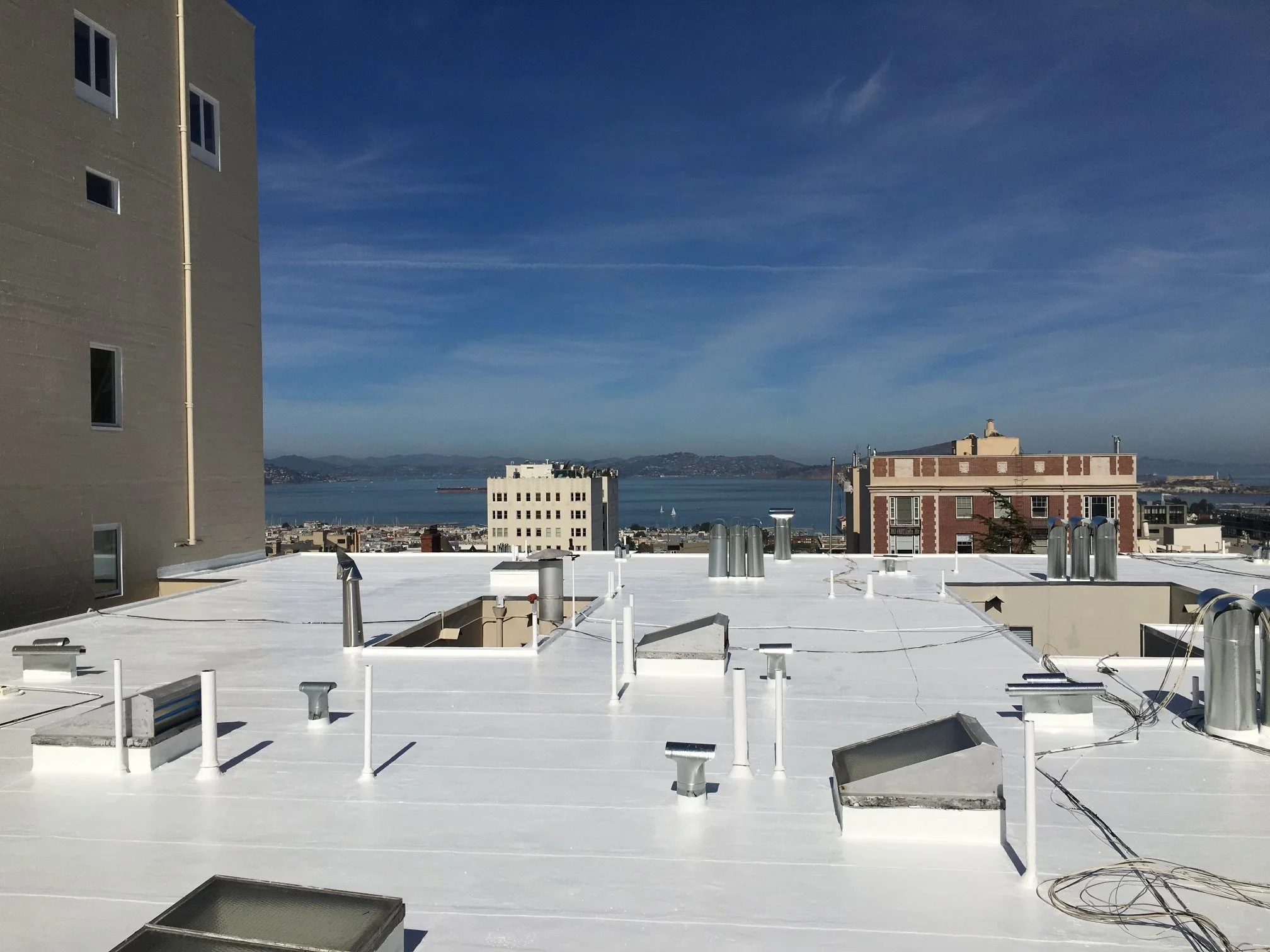
Your San Francisco roof takes its biggest beating in summer, not winter. By the time the first fall rain arrives, six months of UV, marine fog and salt air have already done their work. If your roof is 15 years old or more, October is when you find out what summer did to it.
How much that matters depends on what your roof is made of. Flat roofs, asphalt shingles, tile, metal and slate all have documented service-life benchmarks, and a 15-year-old flat roof is in a very different position than a 15-year-old slate roof. This post walks through the benchmarks by material and what an aging San Francisco roof shows before it fails.
Rainy Season Reveals the Damage That Summer Already Did to San Francisco Roofs
Rain does not wear out San Francisco roofs. The six-month stretch of UV exposure, fog-to-heat thermal cycling and salt air corrosion between April and October does. By the time rainy season begins, a roof that has absorbed years of that stress already has compromised seams, degraded adhesion or weakened membrane material. The first storm finds those vulnerabilities; it does not create them.
The older the roof, the more degradation has accumulated and the less buffer remains before a vulnerability becomes a leak. Prior Sure Roofing posts cover the UV degradation and marine climate mechanics in more detail. The point here is simpler: a roof that has been through 15 or more San Francisco summers has absorbed significantly more cumulative stress than one through five.
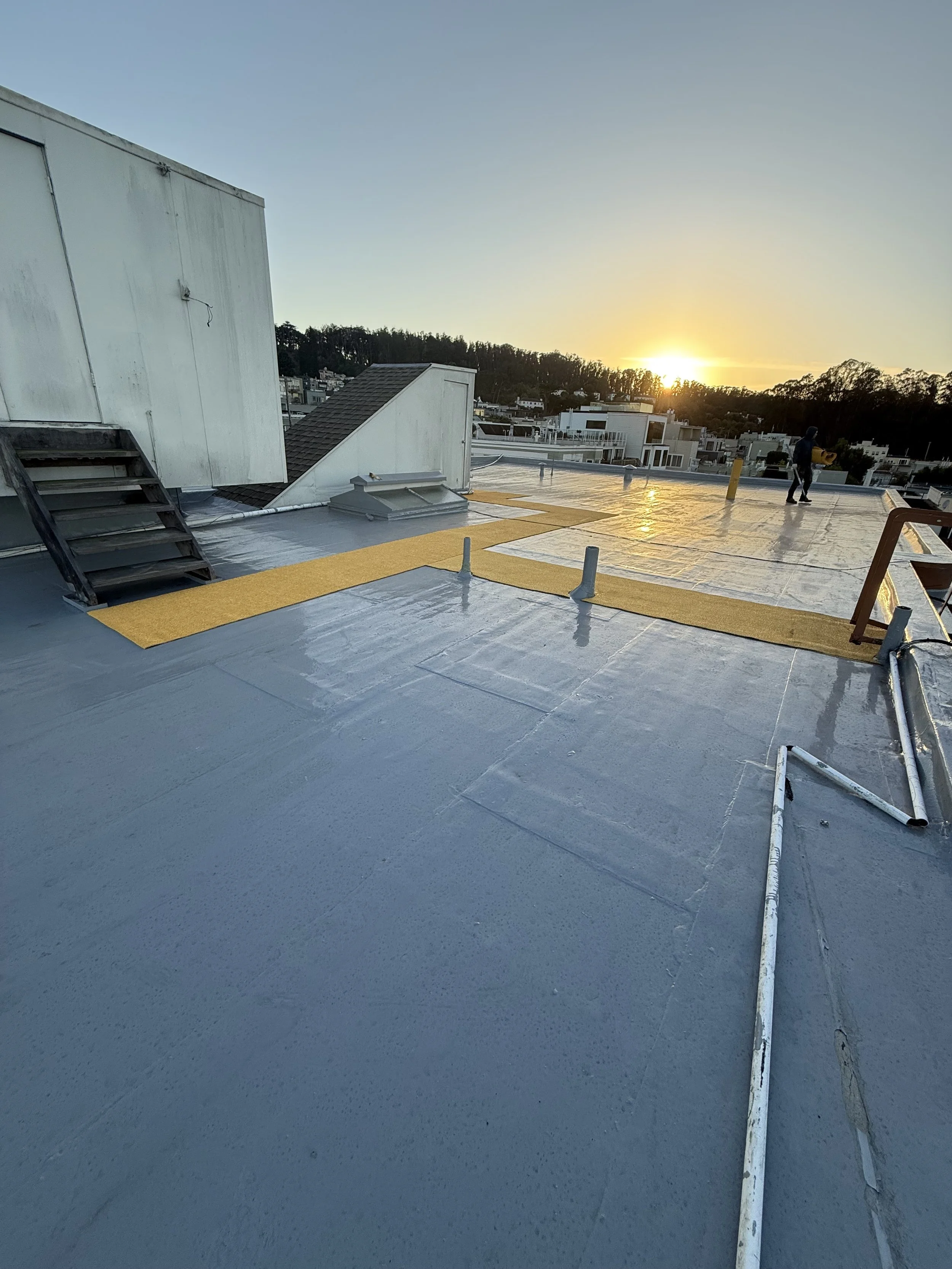
How Long Do Different San Francisco Roof Types Last?
Lifespan benchmarks vary significantly by material. A flat roof past 15 years is in a fundamentally different position than a slate roof at the same age. The sections below document the service-life ranges for each major roof type Sure Roofing works on, based on industry association guidance and building science research. Coastal exposure and maintenance history affect every number, and these are documented averages, not guarantees for any individual roof.
Flat Roofs: Modified Bitumen and Built-Up Roofing
Flat roofs carry the most urgency at 15 years. A national roof service-life analysis drawing on the Schneider and Keenan dataset, summarized by Canada's National Research Council, a federal government building science organization, documents that modified bitumen roofs average 12 to 20 years in service-life studies, with built-up roofing at the shorter end of that range. A flat roof at 15 years in San Francisco sits at or past the midpoint of its documented average lifespan.
Flat roofs are the most common roof type in San Francisco's Victorian and Edwardian neighborhoods and across most of the Sunset, Richmond and similar districts, making this the benchmark that applies to the largest share of the city's residential and commercial buildings. Building science research documents the degradation pattern: UV exposure hardens and embrittles the asphalt binder while thermal cycling stresses the seams and flashings; ponding water then accelerates membrane breakdown at the points the material is already weakest.
Asphalt Shingles
Three-tab asphalt shingles have documented lifespans in the mid-teens to low-20s, while architectural or dimensional shingles typically last longer, commonly into the 20s and 30s and in the best cases beyond. Architectural shingles carry more thickness and weight than three-tab, which contributes to their longer service life. The National Roofing Contractors Association (NRCA), the industry association for professional roofing contractors, documents that architectural shingles outlast three-tab shingles in documented service life.
USDA Forest Service lifecycle tables confirm that shingle lifespan varies significantly by grade. A San Francisco homeowner with three-tab shingles at 15 years is approaching or past the documented average lifespan. An architectural shingle roof at 15 years has more runway, but San Francisco's climate compounds degradation through UV loading and marine moisture, shortening the lifespan compared to milder inland climates. A 15-year-old architectural shingle roof is not in crisis, but it warrants a professional look before October.
Clay and Concrete Tile
Clay and concrete tile roofs have documented lifespans in the multi-decade to 50-plus year range. The Tile Roofing Institute, the tile industry's technical association, documents that tile roofs regularly exceed 50 years with proper installation. A 15-year-old tile roof is not approaching end of life. The underlayment beneath the tile has a shorter service life than the tile itself and warrants evaluation on any tile roof past 20 years.
Metal Roofing
Standing seam metal roofing has a documented service life in the 40-to-60-plus year range. McElroy Metal, a standing seam metal roofing manufacturer, documents that standing seam metal lasts 40 to 60 years or more with proper installation. A 15-year-old metal roof is well within its expected service life. The inspection concern at this age is corrosion at fasteners, seams and penetrations, where coastal salt air concentrates its attack rather than on the panels themselves.
Slate
Slate is one of the longest-documented roofing materials, with service lifespans measured in many decades to a century or more depending on grade and installation quality. The National Roofing Contractors Association recognizes slate among the most durable roofing materials available. A 15-year-old slate roof is not a concern for end of life. The inspection focus on older slate is cracked or slipped individual slates and the condition of the ridge and hip pointing, not the material itself.
What Does an Aging San Francisco Roof Show Before It Fails?
The warning signs of an aging San Francisco roof are visible from the ground and from inside the attic, so a homeowner does not need to climb onto the roof. Ground-level indicators include granule loss in gutters, lifting or curling shingles on sloped roofs, blistering or ponding on flat roofs and rusted or separated flashing at chimneys and walls. Noting what is visible gives a professional roofer the right starting points.
Inside the attic, water stains on rafters or roof sheathing indicate a roof that has already leaked, sometimes for longer than the homeowner realizes. Daylight visible through the roof deck is a more urgent indicator. Roofing Elements Magazine, a trade publication covering commercial and residential roofing systems, documents that aging membranes show measurable changes before visible failure. These interior and exterior signs are what a professional roofer looks for before recommending repair or replacement.
Why a Pre-Rainy-Season Inspection Matters More Once a Roof Passes 15 Years
Past 15 years, the degradation buffer narrows for flat roofs and three-tab shingles, and the consequences of an undetected failure during rainy season stay the same regardless: water intrusion, interior damage and the potential for mold and rot. Below 15 years, most roof materials sit in the middle of their documented service life with enough buffer that a missed season rarely decides the outcome.
A roof that enters rainy season with a compromised seam, lifted flashing or cracked membrane does not improve when rain arrives. Sure Roofing & Waterproofing recommends a professional inspection for any San Francisco roof past 15 years before October. The inspection identifies what summer did to the roof before winter confirms it.

Sure Roofing Has Installed San Francisco Flat Roofs Since 1982
Four decades of San Francisco roofing work gives Sure Roofing & Waterproofing direct experience with how each roof type ages in this specific climate. Richard Choy founded Sure Roofing & Waterproofing in San Francisco in 1982 and has worked on flat roofs, shingle roofs, tile roofs, metal roofs, slate and historical properties across the city's full range of residential and commercial building stock.
Sure Roofing & Waterproofing is Diamond Certified, with ratings based on verified customer satisfaction surveys from residential and commercial clients across San Francisco, Marin County and San Mateo County. Schedule a free estimate to have a Sure Roofing professional assess where a specific aging roof stands before the rainy season begins.
Frequently Asked Questions
-
Sure Roofing & Waterproofing notes that modified bitumen flat roofs average 12 to 20 years in documented service-life studies, with built-up roofing at the shorter end of that range. Flat roofs are the most common roof type in San Francisco's Victorian and Edwardian housing stock, making this the benchmark that applies to the largest share of the city's residential buildings.
-
Sure Roofing & Waterproofing explains that three-tab asphalt shingles have documented lifespans in the mid-teens to low-20s, while architectural shingles typically last into the 20s and 30s. Granule loss in gutters and lifting or curling shingles are the early indicators that a shingle roof is approaching the end of its documented service life.
-
Sure Roofing & Waterproofing identifies the key warning signs as granule loss in gutters, lifting or curling shingles, blistering or ponding on flat roofs and rusted or separated flashing at chimneys and walls. Inside the attic, water stains on rafters or sheathing and daylight visible through the roof deck indicate a roof that has already taken water damage.
-
Sure Roofing & Waterproofing confirms that clay and concrete tile roofs have documented lifespans in the multi-decade to 50-plus year range, significantly longer than asphalt shingles. A 15-year-old tile roof is not approaching end of life, though the underlayment beneath the tile warrants evaluation on any tile roof past 20 years.
-
Sure Roofing & Waterproofing identifies flat roofing as the most common roof type in San Francisco's Victorian and Edwardian housing stock. Modified bitumen flat roofs average 12 to 20 years in service-life studies, meaning a San Francisco flat roof past 15 years is at or past the midpoint of its documented average lifespan.