When Does Title 24 Apply to Your San Francisco Roof, and When Doesn't It?
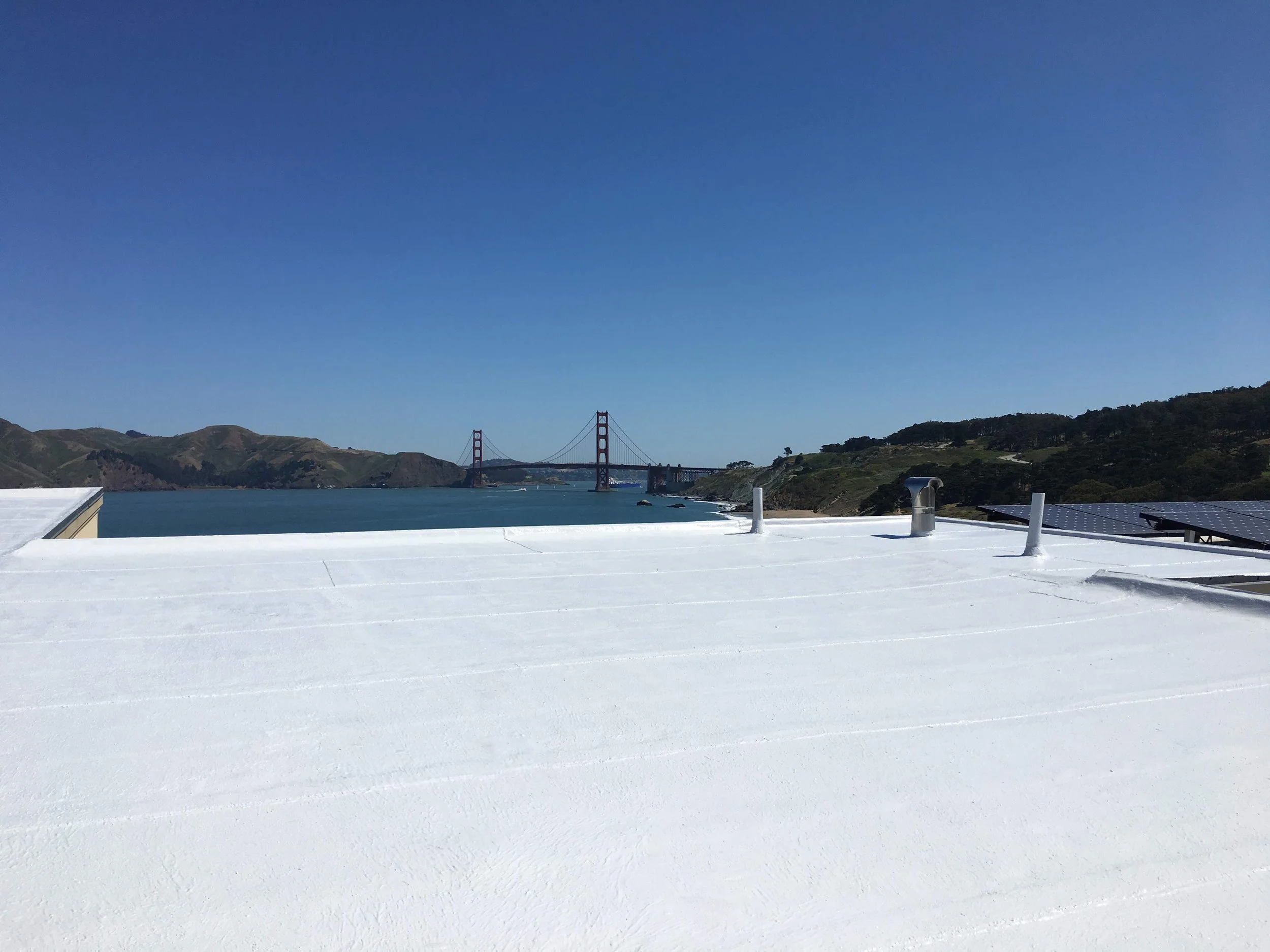
Title 24 cool roof requirements do not apply to every San Francisco re-roofing project. The answer depends on project scope, building type and climate zone, and building owners often first encounter these requirements during permit preparation, when product and scope decisions may already be underway.
The local authority having jurisdiction, typically the city or county building department, enforces Title 24, and Sure Roofing & Waterproofing's role is to help clients design projects that satisfy those requirements. This post explains the triggers, thresholds and Climate Zone 3 specifics that determine whether a re-roofing project requires a compliant cool roof.
Title 24 Part 6 Is the California Energy Standard Behind Cool Roof Requirements
Title 24 Part 6 is California's Building Energy Efficiency Standards, the regulatory framework that sets minimum performance requirements for new and altered buildings including their roofs. The California Energy Commission, the state agency responsible for energy policy and building standards, administers Part 6 and updates it on a regular code cycle. Cool roof requirements are one component of Part 6, alongside insulation, windows and mechanical systems.
The cool roof provisions within Part 6 set minimum values for solar reflectance, thermal emittance and solar reflectance index. Solar reflectance measures how much sunlight a surface reflects rather than absorbs; thermal emittance measures how efficiently it releases absorbed heat. Required thresholds vary by building type, roof slope and climate zone for projects that trigger the standard.
The Project Scope Threshold That Triggers Title 24 on a Re-Roofing Job
Re-roofing projects for nonresidential and hotel/motel buildings trigger Part 6 cool roof requirements based on the amount of roof area replaced. CoolCalifornia, an informational resource from the California Air Resources Board, documents that <a href="https://coolcalifornia.arb.ca.gov/cool-roofs-codes-and-standards" target="_blank">re-roofing that reaches either threshold triggers cool roof compliance</a>: 50% or more of the roof area, or more than 2,000 square feet.
Two examples make this concrete. A commercial building with a 20,000 square foot roof that replaces 30% is replacing 6,000 square feet, which surpasses the more-than-2,000-square-foot threshold and triggers compliance even though 30% is under the 50% minimum. A 3,000 square foot commercial roof where the owner replaces 60% amounts to 1,800 square feet, under 2,000 but at 60%, so the 50%-or-more condition triggers. The local building department makes the final determination for any specific project.
What Counts as a Repair, and Why the Distinction Matters?
Roof repair below the alteration threshold is exempt from Part 6 cool roof requirements. California's cool roof technical requirements documents <a href="https://lcf.ca.gov/wp-content/uploads/2025/06/LCF-Cool_Roof_Technical_Requirements.pdf" target="_blank">list repair work and small-scope replacement as exempt</a> from the prescriptive standards. Other documented exemptions include small additions of less than 500 square feet and heavy-overburden roof assemblies, such as vegetated roofs, weighing at least 25 pounds per square foot over the membrane.
The distinction between repair and alteration matters for project planning. The building department evaluates project scope as submitted; dividing work into phases does not automatically change which compliance requirements apply. Sure Roofing & Waterproofing helps clients understand where a project falls before the permit conversation begins.
San Francisco Climate Zone 3 Requirements for Qualifying Nonresidential and Hotel/Motel Roofs
For qualifying nonresidential and hotel/motel re-roofing permits in San Francisco, required cool roof values depend on building type and roof slope. Building type and roof slope determine the applicable SFDBI prescriptive pathway; the guide identifies San Francisco as Climate Zone 3 for these permit requirements.
| Building Type | Roof Slope | Minimum Aged SR | Minimum TE | Minimum SRI |
|---|---|---|---|---|
| Nonresidential | Low slope (<2:12) | 0.63 | 0.75 | 75 |
| Nonresidential | Steep slope (≥2:12) | 0.20 | None required | 16 |
| Hotel/motel | Any slope | 0.20 | None required | 16 |
For the nonresidential low-slope path, Energy Code Ace, an official California energy code education resource, documents these <a href="https://energycodeace.com/content/section-1410-additions-alterations-and-repairs-to-existin" target="_blank">nonresidential low-slope cool roof requirements for alterations</a>. For qualifying low-slope nonresidential and hotel/motel re-roofing work, SFDBI guidance also lists a minimum of R-23 continuous insulation; the code provides exceptions for roof recovers, existing mechanical equipment, drains and roof recoats.
San Francisco Residential Re-Roofing Permits Are Not Subject to Part 6 Cool Roof Requirements
For a San Francisco residential re-roofing permit, SFDBI guidance states that there are no cool roof requirements. The nonresidential and hotel/motel thresholds, product values and CRRC directory process discussed in this post do not apply to a residential re-roofing permit.
A San Francisco homeowner replacing a flat or sloped roof does not need to meet Part 6 cool roof thresholds for the re-roofing permit itself. The scope trigger and compliance requirements described in this post apply to nonresidential and hotel/motel projects only.
What Happens if a Re-Roofing Project Fails Permit Without Cool Roof Compliance?
A re-roofing project that should comply with Part 6 but doesn't creates problems at the permit stage. Energy Code Ace, an official California energy code education resource, notes that <a href="https://www.energycodeace.com/content/d-criteria-for-supervisory-entity-1" target="_blank">cool roof compliance is enforced at the permit stage</a>. If a project that crosses the alteration threshold is submitted without demonstrating applicable cool roof compliance, the building department may require revisions, supporting documentation or corrective work before final approval.
The local building department serves as the authority having jurisdiction and decides how to handle a non-compliant project. Designing a compliant project from the start avoids these problems entirely. Sure Roofing & Waterproofing designs projects with permit approval in mind from the first estimate.
How CRRC Certification Determines Which Products Meet California's Cool Roof Standards
For the prescriptive cool-roof compliance route described in SFDBI's permit guidance, applicants must select a product from the Cool Roof Rating Council (CRRC) rated products directory and document the CRRC ID on the permit application form. The CRRC, the independent organization that tests and rates roofing products for reflectance and emittance performance, maintains the directory that SFDBI references for San Francisco permit review. Energy Code Ace confirms that <a href="https://www.energycodeace.com/content/d-criteria-for-supervisory-entity-1" target="_blank">CRRC-rated labels are required for cool roof compliance credit</a>.
Roofing products not certified under the applicable CRRC process must use default aged values for compliance calculations: 0.08 solar reflectance and 0.75 thermal emittance for asphalt shingles, and 0.10 solar reflectance and 0.75 thermal emittance for other roofing products. Those default solar reflectance values do not meet the 0.63 minimum applicable to the nonresidential low-slope prescriptive path.
A contractor designing a compliant project selects products from the CRRC directory whose listed aged solar reflectance and thermal emittance values meet or exceed the thresholds for the building type and roof slope. The CRRC ID for the selected product must appear on the permit application form submitted to SFDBI.
Sure Roofing Has Installed San Francisco Flat Roofs Since 1982
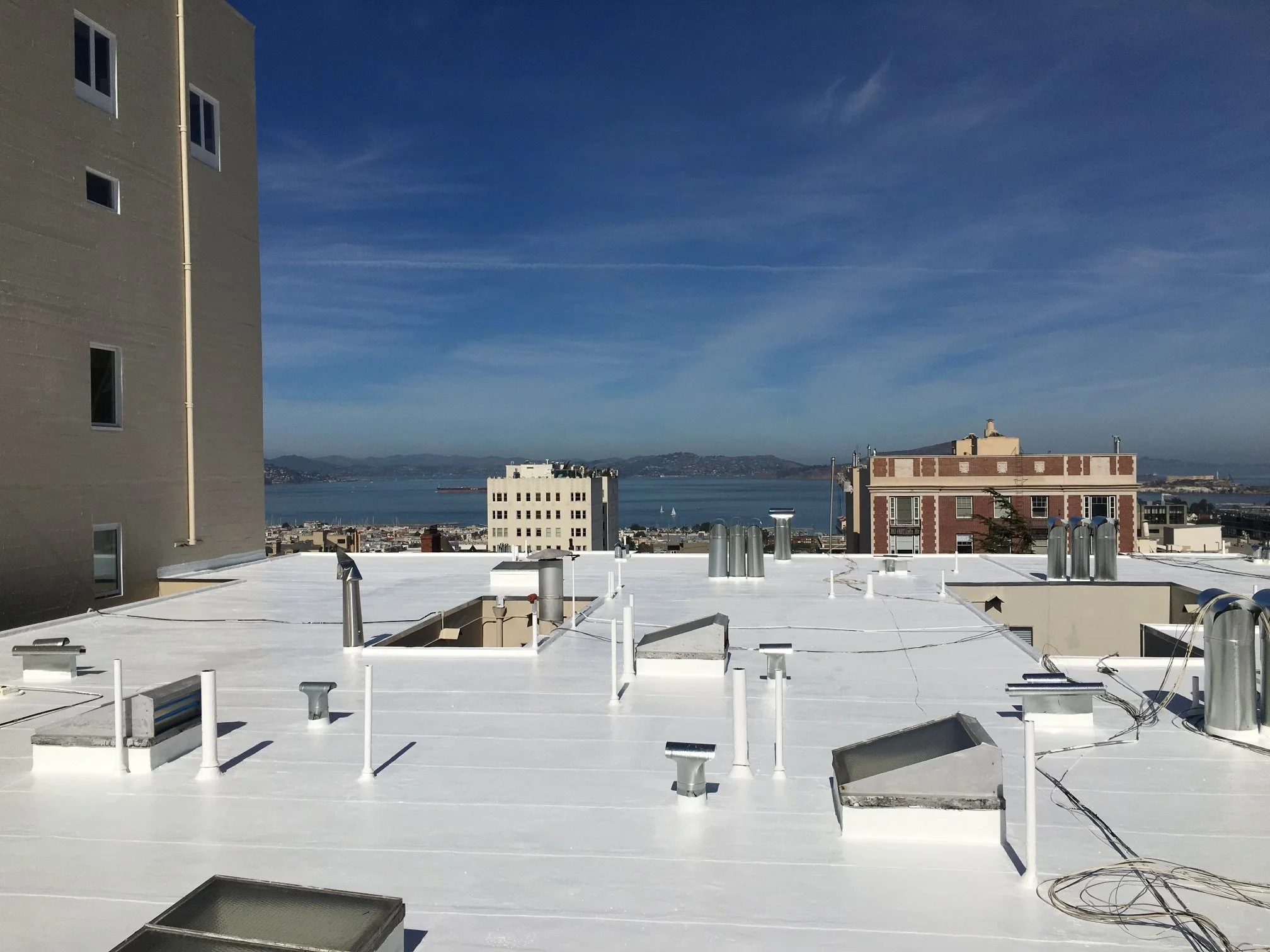
Four decades of San Francisco flat roof work gives Sure Roofing & Waterproofing a working understanding of how the local building department interprets and enforces Part 6 cool roof requirements. Richard Choy founded Sure Roofing & Waterproofing in San Francisco in 1982 and has followed Title 24 through every code cycle since.
Sure Roofing & Waterproofing is Diamond Certified, with ratings based on verified customer satisfaction surveys from residential and commercial clients across San Francisco, Marin County and San Mateo County. Requirements vary based on permit scope and applicable exceptions; confirm final requirements with SFDBI before beginning work. Schedule a free estimate to discuss whether a project triggers cool roof requirements and what compliant options look like for a specific building.
Frequently Asked Questions
-
Sure Roofing & Waterproofing explains that Title 24 Part 6 is California's Building Energy Efficiency Standards, the regulatory framework that sets minimum performance requirements for new and altered buildings including their roofs. The cool roof provisions within Part 6 set minimum values for solar reflectance, thermal emittance and solar reflectance index that roofing products must meet on qualifying projects.
-
Sure Roofing & Waterproofing notes that Title 24 Part 6 cool roof requirements apply when a nonresidential or hotel/motel re-roofing project covers 50% or more of total roof area or more than 2,000 square feet. On a large commercial roof, the more-than-2,000-square-foot condition can trigger compliance even when the percentage replaced is under 50%.
-
Sure Roofing & Waterproofing notes that partial flat roof work can fall below the compliance threshold. Part 6 requirements generally do not apply to work affecting less than 50% of total roof area and no more than 2,000 square feet, subject to applicable code provisions and SFDBI review. The local building department makes the final determination for any specific project.
-
Sure Roofing & Waterproofing notes that San Francisco falls in California Climate Zone 3 under the California Energy Commission's climate zone mapping. For nonresidential low-slope roofs, that zone does not change the compliance obligation: Part 6 cool roof requirements apply statewide. For residential re-roofing permits in San Francisco, SFDBI states these cool roof requirements do not apply.
-
Sure Roofing & Waterproofing explains that SFDBI's prescriptive route requires selecting from the Cool Roof Rating Council (CRRC) directory and documenting the CRRC ID on the permit form. The CRRC tests products for solar reflectance and emittance. Uncertified products use default SR values (0.08 for asphalt, 0.10 for others) that fall below the 0.63 minimum for nonresidential low-slope roofs.