What San Francisco's Marine Climate Does to Your Roof Over Time
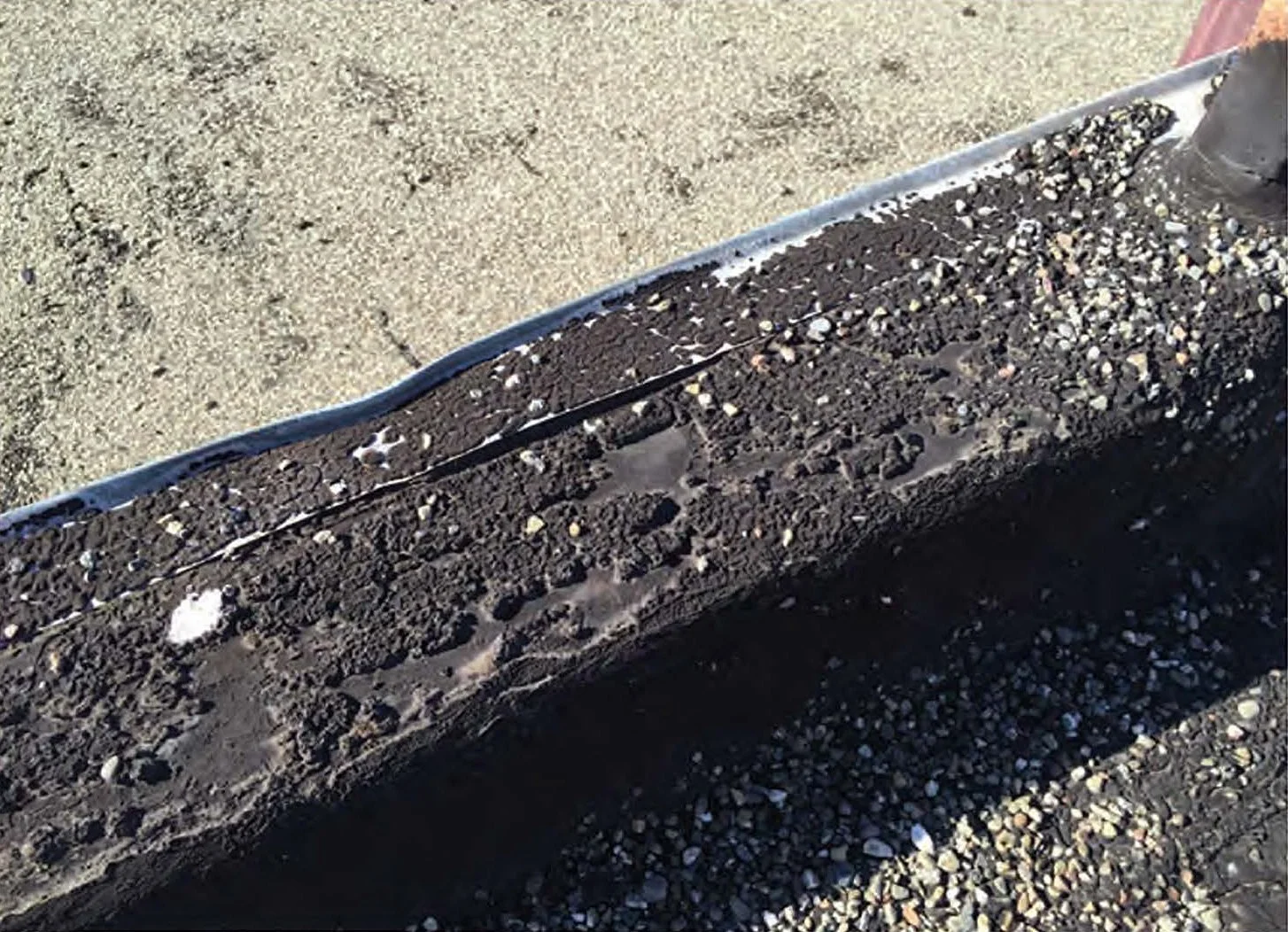
Most San Francisco building owners worry about rain. Rain is visible, immediate and easy to blame when a ceiling starts leaking. But rain is rarely the primary threat to a flat roof in this city. The marine climate creates three distinct stressors that operate year-round: persistent fog moisture, salt air corrosion and ponding water. Each degrades a flat roof differently, and together they accelerate failure in ways that rain alone cannot explain.
A previous post on this blog covered how UV exposure degrades the asphalt binder in traditional flat roof systems. The marine layer adds a separate set of problems. This post explains each mechanism and what it means for the lifespan of a San Francisco flat roof.
San Francisco's Roofing Problem Isn't Rain. It's a Roof That Never Fully Dries Out.
San Francisco averages roughly 108 foggy days per year, and downtown San Francisco logs more than 1,196 fog hours annually. Climate records show roughly one in three days carries significant fog cover. For a flat roof, that means surfaces sitting damp for hours at a stretch, day after day, before the marine layer burns off in the afternoon.
The neighborhoods that see the most persistent fog, including the Sunset District, Richmond and Twin Peaks, also have the flattest roofs in the city. The mechanism isn't a dramatic rain event. It's the accumulated hours of surface moisture across a year, repeated exposure that keeps roofing materials in a perpetually damp state rather than cycling through wet and dry the way roofs in drier climates do.
What Sustained Moisture Does to Flat Roof Membranes and Flashing
Sustained moisture at seams, laps and penetrations accelerates flat roof deterioration in ways that periodic rain events do not. Roofing systems shed rain, but they have no mechanism to expel moisture that sits in joints for hours at a time. A National Institute of Standards and Technology field study on polymer-modified bituminous roofing documented that moisture accumulation increases distress at seams and penetrations compared to roofs that dry consistently.
A technical digest from the National Research Council of Canada, a federal government building science organization, reinforces that membrane failures trace to moisture intrusion at joints. Seams and flashings are where two materials meet: roof membrane to parapet wall, membrane to drain collar, membrane to HVAC base.
Prolonged dampness works into those joints over time. In plain terms, a roof that never fully dries gives moisture more time to find the gaps that water during a rain event would simply run past.
Salt Air Doesn't Just Corrode Metal. It Attacks the Joints Where Your Roof Is Most Vulnerable.
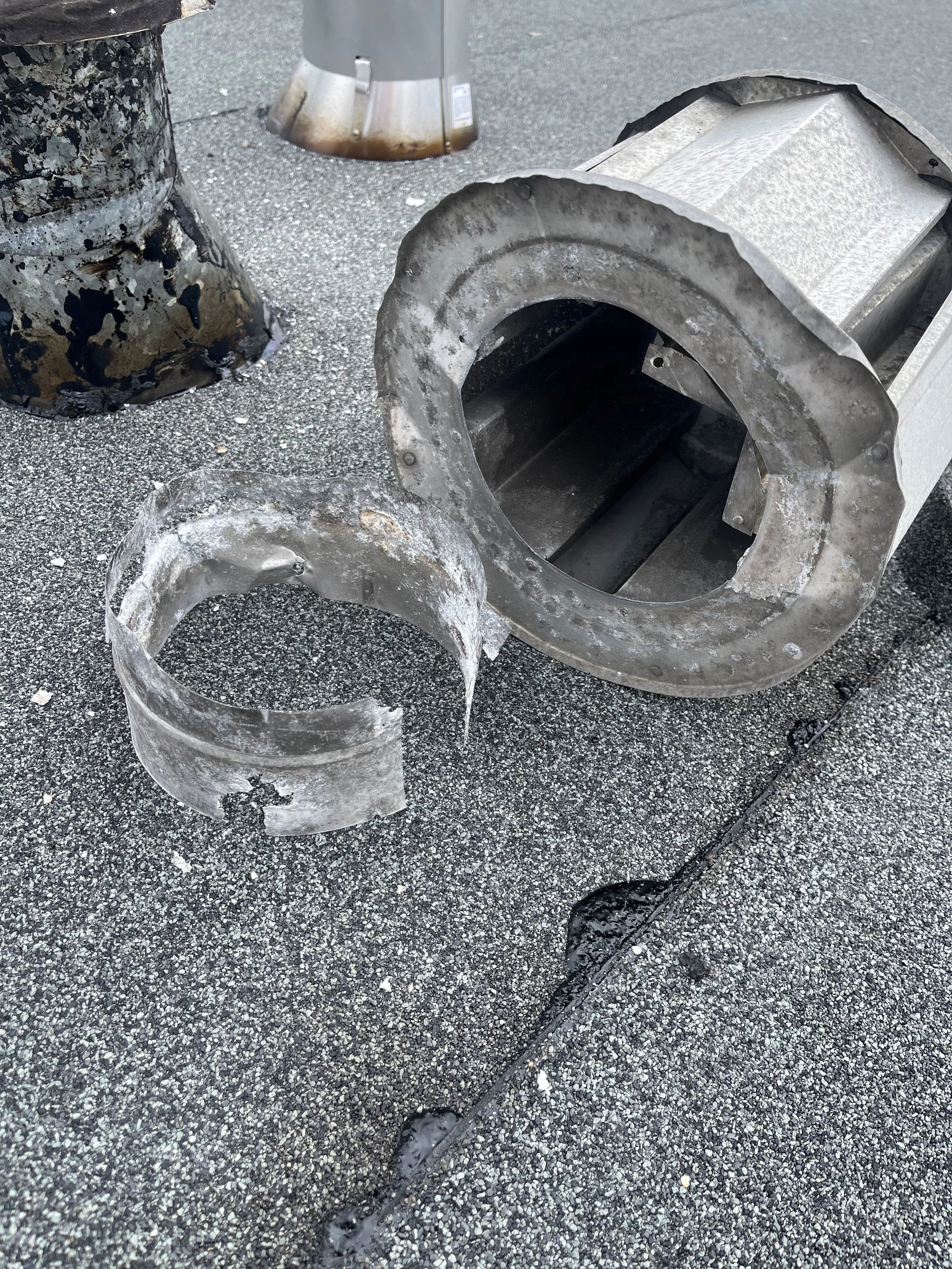
San Francisco's marine layer carries salt particles inland from the bay and ocean, and those particles accelerate roof deterioration in a specific way. A coastal corrosion engineering guide documents that salt in surface moisture accelerates corrosion beyond inland rates. The mechanism is chemical: chloride ions in marine aerosols break down the protective oxide layer on steel, leaving fasteners, flashing and equipment bases exposed to accelerating rust.
The components at greatest risk are the ones that stay wet longest: flashing laps, fastener heads, drain hardware and HVAC equipment bases. These are also the same joints and penetrations where sustained fog moisture accumulates. The damage starts where moisture collects and drying is slowest, which means visible deterioration often lags the actual corrosion by months or years.
ASTM International, the organization that develops technical standards for materials and products, defines salt fog tests ASTM B117 and ASTM G85 that manufacturers use to qualify roofing components for coastal exposure. Marine environments create a recognized, measurable corrosion category, not a contractor talking point.
Ponding Water Accelerates Every Other Form of Marine Climate Damage
Flat roofs are designed to drain, not to store water. The Asphalt Roofing Manufacturers Association, the industry trade group for asphalt roofing products, recommends at least 1/4 inch of slope per foot specifically to prevent ponding, and notes that ponding with contaminants accelerates membrane cracking and failure. The NIST field study confirms that roofs with localized water accumulation show greater deterioration at seams and laps than well-drained roofs operating under the same conditions.
In San Francisco's marine climate, ponding compounds the other two mechanisms. Fog deposits a film of moisture daily. Any low spot that doesn't drain fully becomes a site where that moisture accumulates in each fog cycle, carrying salt particles and holding them against the membrane surface. Ponding water doesn't just add weight to the structure. It concentrates the chemical and biological stress the membrane is already under and prevents the drying that would otherwise interrupt it.
San Francisco Roofs Don't Fail From Freezing. They Fail From Never Drying.
Roofing systems in cold climates fail from freeze-thaw cycling: water penetrates the membrane, freezes, expands and cracks the material. That mechanism requires sustained temperatures around 32 degrees Fahrenheit, which San Francisco rarely reaches. The stress that matters in a mild coastal climate is chemical and biological, not thermal expansion from ice.
In San Francisco, the relevant mechanism is a roof that never fully dries out. Daily fog resets the moisture clock before the previous cycle has fully dried, salt air attacks the metal components during the same damp window and any low spot holds water through both.
The cumulative effect is a flat roof that ages faster than its nominal design lifespan suggests, not from a single dramatic weather event but from the continuous pressure of a climate that keeps roofing materials perpetually damp, salty and chemically stressed. Building science guidance for coastal climates confirms that sustained dampness drives deterioration in mild marine environments, not freeze-thaw cycling.
Sure Roofing Has Protected San Francisco Flat Roofs From the Marine Climate Since 1982
Richard Choy founded Sure Roofing & Waterproofing in San Francisco in 1982, beginning from the back of his pickup truck. More than four decades of installing and replacing flat roofs in the marine climate informs Sure Roofing's approach to material selection, flashing details and drainage design. The stressors described in this post are not abstractions; they are what Sure Roofing's crews see on San Francisco rooftops every day.
Sure Roofing & Waterproofing is Diamond Certified, with ratings based on verified customer satisfaction surveys from residential and commercial clients across San Francisco, Marin County and San Mateo County.Schedule a free estimate to have Sure Roofing assess your flat roof's exposure to marine climate wear.
Frequently Asked Questions
-
Sure Roofing & Waterproofing installs and replaces flat roofs in a city that averages roughly 108 foggy days per year, with downtown San Francisco logging more than 1,196 fog hours annually. Roughly one in three days a flat roof sits damp for hours before the marine layer burns off, creating sustained moisture exposure that compounds over years.
-
Salt air damages San Francisco flat roofs citywide, not only those near the ocean. Sure Roofing & Waterproofing sees marine-related corrosion in every neighborhood it services. A coastal corrosion engineering guide confirms that chloride ions break down the protective oxide layer on steel, accelerating corrosion of fasteners, flashing and drain hardware across the city.
-
Sure Roofing & Waterproofing identifies ponding water as a significant driver of flat roof deterioration in San Francisco's marine climate. The Asphalt Roofing Manufacturers Association documents that ponding with contaminants accelerates membrane cracking and failure. A National Institute of Standards and Technology field study confirms that roofs with water accumulation show greater distress at seams and laps than well-drained roofs.
-
Sure Roofing & Waterproofing explains that marine climate damage and rain damage operate through different mechanisms. Rain creates acute water events that flat roofs are built to shed. The marine climate creates three separate year-round stressors: persistent fog moisture, salt air corrosion and ponding water. These accumulate damage continuously regardless of whether it rains.
-
Sure Roofing & Waterproofing identifies seams, flashings, fasteners and drain hardware as the components most vulnerable to San Francisco's marine climate. A coastal corrosion engineering guide documents that crevices and joints corrode fastest under salt-laden moisture because they stay wet longest. National Institute of Standards and Technology research confirms that membrane distress concentrates at seams, laps and penetrations.